
“Health is not merely the absence of disease — it is a dynamic state of physical, mental, and social wellbeing.”
That definition, rooted in the World Health Organization’s 1948 constitution, captures something profound: you can have a perfectly functioning body and still feel utterly broken. You can be financially successful with a rigorous gym routine and still feel deeply isolated and emotionally hollow. True health triangle demands that all three dimensions — physical, mental, and social — are attended to with equal care.
That’s exactly what the Health Triangle models. Developed as a framework in health education and widely used in schools and wellness programs across the globe, the Health Triangle is one of the most elegant and practical models for understanding human wellbeing ever created. And in an era of chronic disease, rising mental health crises, and epidemic loneliness, understanding it has never been more important.
What Is the Health Triangle?
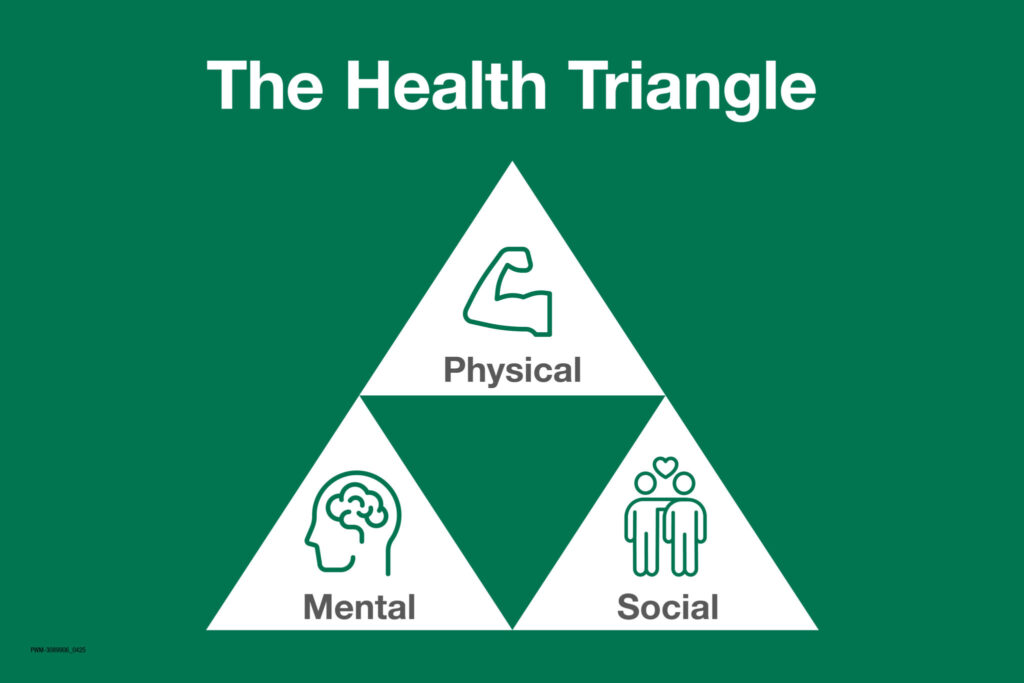
The Health Triangle is a conceptual model that represents health as an equilateral triangle — three equal sides, each dependent on the others. The three sides are:
💪
Physical Health
The state and function of your body — fitness, nutrition, sleep, disease prevention, and physical activity.
🧠
Mental Health
Your emotional and psychological wellbeing — how you think, feel, manage stress, and relate to your inner world.
🤝
Social Health
The quality of your relationships and ability to connect — your sense of community, belonging, and communication skills.
HEALTHTRIANGLEPHYSICALHEALTHMENTALHEALTHSOCIALHEALTHMind–Body LinkBody–Social LinkMind–Social Link
The Health Triangle — three interconnected dimensions of wellbeing, each side influencing the others.
The genius of the triangle metaphor lies in its geometry: weaken any one side and the entire structure becomes unstable. You can’t have a strong, stable triangle with one short side. Health works exactly the same way.
Physical Health — The Foundation
Physical health is perhaps the most visible and measurable dimension of the triangle. It encompasses everything related to how your body functions: your cardiovascular fitness, muscular strength, flexibility, immune resilience, sleep quality, nutritional status, and freedom from chronic illness or injury.
But physical health is not just about being thin, muscular, or having “clean” bloodwork. It includes how you treat your body across a lifetime — the habits you build, the rest you allow, the substances you avoid, and the preventive care you seek. Physical health is the platform on which everything else is built.
150+
Minutes of moderate exercise per week recommended by the WHO
7–9
Hours of sleep adults need nightly for optimal health
80%
Of chronic diseases are preventable through lifestyle choices
Physical health directly impacts mental health in ways that are now supported by decades of neuroscience. Exercise increases the production of BDNF (brain-derived neurotrophic factor), essentially a fertilizer for brain cells. Poor sleep degrades cognitive function, emotional regulation, and decision-making. Chronic inflammation — often driven by diet, inactivity, and stress — has been linked to depression, anxiety, and neurodegenerative disease.
🌿 Key Components of Physical Health
- Regular aerobic and strength exercise (at least 150 minutes/week moderate activity)
- A whole-food, nutrient-dense diet rich in vegetables, lean protein, and healthy fats
- Consistent, quality sleep of 7–9 hours per night
- Avoiding or minimizing smoking, excess alcohol, and sedentary behavior
- Routine medical check-ups and preventive screenings
- Adequate hydration — typically 2–3 liters of water daily for most adults
- Sexual and reproductive health awareness
Mental Health — The Command Center
Mental health governs how we think, feel, and behave. It’s the lens through which we perceive the world, interpret events, relate to ourselves, and respond to challenges. A person with strong mental health doesn’t necessarily live a stress-free or problem-free life — instead, they’ve developed the emotional resilience, self-awareness, and coping skills to navigate difficulties without being overwhelmed by them.
Mental health includes emotional wellbeing (how you feel day-to-day), psychological wellbeing (how you think about yourself and your life), and behavioral patterns (how you respond to your environment). It’s shaped by genetics, early childhood experiences, trauma, relationships, and — crucially — the habits and practices you choose.
One of the most important shifts in modern medicine has been recognizing that mental health is not a luxury concern for those with diagnosed disorders. It’s a daily reality for every human being, and it profoundly shapes physical health outcomes. Studies consistently show that people living with untreated depression have a significantly higher risk of cardiovascular disease, diabetes, and premature death.
🧠 Key Components of Mental Health
- Emotional self-awareness — recognizing and naming your feelings
- Effective stress management through mindfulness, journaling, or therapy
- Positive self-esteem and a healthy internal dialogue
- Resilience — the ability to bounce back from setbacks
- Purpose and meaning — having goals that matter to you
- Healthy coping mechanisms instead of avoidance or numbing
- Willingness to seek professional help when needed
Mental health is also the bridge between the physical and social dimensions. Emotional dysregulation — difficulty managing emotions — makes it harder to maintain healthy relationships and makes us more likely to turn to substances, overeat, or disengage from exercise. Conversely, strong mental health fuels the motivation, consistency, and social engagement that reinforce the other sides of the triangle.
Social Health — The Hidden Multiplier
Social health is arguably the most underappreciated side of the triangle — and the one most at risk in the modern world. However, Social health refers to the quality and depth of your relationships, your sense of belonging to a community, your ability to communicate effectively, and your capacity to give and receive support.
Humans are profoundly social animals. Our nervous systems evolved over hundreds of thousands of years in small, interdependent groups. Loneliness and social isolation don’t just feel bad — they trigger measurable biological stress responses. Research by social neuroscientist John Cacioppo showed that chronic loneliness increases cortisol levels, impairs immune function, disrupts sleep architecture, and even accelerates cognitive decline.
Startling research finding: A landmark meta-analysis published in PLOS Medicine found that social isolation is associated with a 29% increased risk of heart disease and a 32% increased risk of stroke — comparable in mortality risk to smoking 15 cigarettes a day.
Social health isn’t about having hundreds of friends or being extroverted. Introverts can have excellent social health. It’s about the quality of connection — having at least a few relationships in which you feel truly seen, valued, and supported. It includes your ability to set healthy boundaries, resolve conflict, ask for help, and contribute meaningfully to others.
🤝 Key Components of Social Health
- Nurturing close, reciprocal friendships and family bonds
- Developing strong communication and active listening skills
- Setting and respecting healthy boundaries in relationships
- Participating in community, group activities, or volunteering
- Practicing empathy and resolving conflicts constructively
- Giving and receiving support without shame or excessive guilt
- Cultivating a sense of belonging — to a place, a group, or a cause
Why Balance Is Everything
The most important insight of the Health Triangle model is not that these three dimensions exist — it’s that they are interdependent. You cannot achieve lasting wellness by optimizing one side while neglecting the others. The triangle’s stability requires all three sides to be approximately equal.
Consider some common real-world imbalances:
The Fitness Obsessive. Someone who exercises two hours a day, follows a perfect diet, and hits every health metric — but uses their workout routine to escape emotional pain, neglects close friendships, and struggles with anxiety. Their physical health is excellent. Their mental and social health is suffering. The result? Despite their impressive physique, they often feel unfulfilled, disconnected, and emotionally fragile.
The Social Butterfly. A person with an enormous, active social life — always surrounded by people, deeply embedded in community — but who never exercises, sleeps poorly, and eats erratically. Their social health is strong, but physical neglect eventually shows up as fatigue, illness, and declining energy that begin to limit their social engagement.
The Mindfulness Master. Someone deeply attuned to their emotions, practicing daily meditation, in therapy, and psychologically self-aware, but isolated, with few friends, and physically sedentary. They understand themselves beautifully but lack the relational depth and bodily health that would make that self-awareness fully come alive.
In each case, the imbalanced triangle creates fragility. Real, robust health requires ongoing attention to all three dimensions — not perfection in each, but consistent, intentional engagement.
How to Improve All Three Sides
You don’t need to overhaul your life overnight. Small, consistent adjustments — made simultaneously across all three dimensions — compound into remarkable change over time. Here’s a practical starting framework:
Building Physical Health
Start with the fundamentals: move your body daily, even if it’s just a 20-minute walk. Prioritize sleep above nearly everything else — sleep deprivation undermines every other health effort. Shift toward a diet centered on whole foods, vegetables, and lean proteins. Reduce ultra-processed food, alcohol, and sedentary screen time. Schedule annual check-ups and don’t ignore symptoms.
Strengthening Mental Health
Develop a daily practice of self-reflection — whether through journaling, meditation, or simply five minutes of quiet in the morning. Identify your main stressors and build a toolkit for managing them. If you’re struggling, therapy is not a last resort — it’s one of the most effective evidence-based interventions available. Limit doom-scrolling. Practice gratitude. Set boundaries with situations and people that deplete you.
Cultivating Social Health
Invest time in existing relationships — even small, consistent deposits of attention compound into deep connection. Join a group, class, club, or community organization that aligns with your values. Practice being fully present in conversations. Reach out to someone you’ve lost touch with. Volunteer. And importantly: practice vulnerability. Authentic connection requires the courage to be genuinely known.
The Health Triangle in the Modern World
If the Health Triangle was important when it was first conceptualized, it is absolutely critical today. The modern world has simultaneously created more physical convenience, more psychological overwhelm, and more social disconnection than at any point in human history.
We live in obesogenic environments where nutritious food costs more than processed food and movement is designed out of daily life. We live under a 24/7 news cycle and social media ecosystem explicitly engineered to trigger anxiety and outrage. And we live in a loneliness epidemic — the U.S. Surgeon General declared loneliness a public health crisis in 2023, noting that rates of social isolation had doubled in the past several decades.
Technology offers genuine benefits, but the Health Triangle reminds us to use it wisely. A fitness tracker can support physical health. Mental health apps can make mindfulness more accessible. Video calls can maintain social connections across distance. But none of these replace embodied movement, genuine emotional processing, or face-to-face human warmth.
The framework also matters for how we raise children. Health education programs that teach young people about the Health Triangle are equipping them with something more valuable than any single health fact: a mental model for lifelong wellbeing. When a teenager understands that their loneliness, their academic stress, and their skipped meals are all pulling on the same triangle, they develop integrated self-awareness rather than fragmented coping.
Workplaces and organizations are increasingly recognizing this too. Employee wellness programs that focus only on gym memberships and step challenges are addressing one-third of the triangle. The most forward-thinking organizations are building cultures that also support psychological safety, mental health resources, and genuine community among their teams.
Ultimately, the Health Triangle is both a diagnostic tool and an aspirational map. Regularly checking in on each dimension — asking yourself honestly, “How is my physical health right now? My mental health? My social health?” — is one of the most powerful habits you can cultivate. It’s not about achieving a perfect score in each category. It’s about maintaining awareness, noticing when one side is shrinking, and caring enough about your whole self to respond.
Your Triangle Starts Today
Genuine health is not a destination — it’s a dynamic, ongoing practice of attending to your whole self. The Health Triangle gives you the framework. What you do with it is up to you.
Frequently Asked Questions
Everything you need to know about the Health Triangle, answered clearly.
The Health Triangle as a formal educational model is widely attributed to health educators working within the framework of the WHO’s definition of health, which dates to 1948. The triangular model was popularized in American health education curricula from the 1970s onward, and it has since become a foundational concept in school health programs across the world. While no single person is credited as the sole inventor, it evolved from the biopsychosocial model of health championed by psychiatrist George Engel in the late 1970s.
Who invented the Health Triangle?+
Yes — and this is exactly why the Health Triangle model is so useful. Many people are strong in one or two dimensions while neglecting the third. Someone can be physically fit but emotionally struggling, or socially connected but physically sedentary. However, the research strongly suggests that imbalances in any one area eventually create strain in the others. Physical illness affects mood. Social isolation raises stress hormones. Chronic anxiety impairs immune function. The triangle reminds us that these dimensions don’t operate in silos — they constantly interact.
Can you be healthy in one area but not the others?+
The evidence increasingly says yes. A major meta-analysis (Holt-Lunstad et al., 2010) found that social relationships had as strong an effect on mortality risk as well-established physical health factors like exercise and obesity. The WHO explicitly includes social wellbeing in its definition of health. Chronic loneliness has been linked to increased risk of cardiovascular disease, stroke, dementia, depression, and early death. Social health is not a soft “bonus” — it is a fundamental biological need.
Is social health as important as physical health?+
A simple self-assessment can be powerful. Rate each dimension on a scale of 1–10: How is your physical health right now (energy, fitness, sleep, nutrition)? Your mental health (mood, stress levels, emotional regulation, sense of purpose)? Your social health (quality of relationships, sense of belonging, connection)? The lowest score is often a signal of where to focus. Also pay attention to patterns: persistent fatigue points to physical neglect, irritability or hopelessness to mental health, and loneliness or conflict to social health needs.